
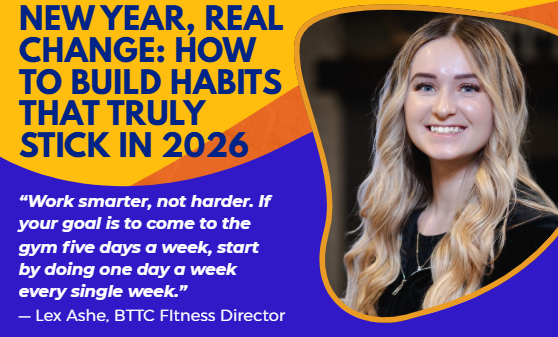
New Year, Real Change: How to Build Habits That Truly Stick in 2026
January brings bright intentions, fresh calendars, and a surge of “new year, new me” energy. But how often do those uplifted promises fade by February — or even earlier?
At Bellingham Training & Tennis Club, we believe in real, sustainable progress, not guilt-laden demands for perfection.
This year, with input from our Fitness Director Lex Ashe and backed by science, we’re shifting the story: instead of pushing harder, let’s understand how habits really form — emotionally, mentally, and physically — and why compassion for our human experience matters just as much as consistency.
START SMALL. BUILD TRUST WITH YOURSELF.
If your goal feels overwhelming, it’s no surprise that motivation fizzles. Lex emphasizes starting with tiny, achievable steps:
“Work smarter, not harder. If your goal is to come to the gym five days a week, start by doing one day a week every single week.” — Lex Ashe, BTTC FItness Director
This isn’t about low expectations — it’s about building evidence that you can keep a commitment you’ve made to yourself. Each time you follow through, you strengthen your self-trust.
And when self-trust grows, so does confidence — and your capacity to do more.
Real change takes time. It’s normal for progress to be nonlinear. Setbacks are part of the process, not signs of failure.
THE BRAIN SCIENCE OF HABIT FORMATION.
You’ve probably heard the old “21 days to form a habit” idea — but research suggests it’s more complex.
In a study published in the European Journal of Social Psychology, researchers found that forming a new automatic behavior can take an average of 66–72 days — and for some people even longer depending on the habit and individual context.
Instead of asking “Can I do this forever?” ask: “Can I do this today?”
One day at a time compounds into weeks of consistency — and weeks become long-term transformation.
MOTIVATION ISN’T ENOUGH. DISCIPLINE HELPS YOU CONTINUE.
Feeling inspired one day doesn’t guarantee you’ll feel it tomorrow — and that’s okay. Lex calls attention to something crucial:
“You are your number one supporter — and that positive talk you have with yourself matters.” — Lex Ashe, BTTC FItness Director
Motivation lights the fire. Discipline keeps it burning.
Practical strategies for staying disciplined can look like scheduling workouts like appointments in your calendar, or tracking your progress visually, so you see your consistency.
EMOTION, IDENTITY, AND WHY YOU “STICK” WITH IT.
Habits aren’t just physical patterns — they’re also emotional and identity-based.
Psychologists describe something called identity-based habits: change feels more sustainable when it aligns with who you see yourself being. Instead of saying “I want to work out,” try: “I am someone who shows up for my health.”
This subtle shift connects your behavior with your sense of self — which makes it stickier.
Habits don’t form in a vacuum — they’re tangled up with stress, mood, energy, and life’s unpredictable rhythms. Being kind to yourself when progress stalls is part of sustainable behavior change.
If you’ve ever felt discouraged by resolutions that fade, you’re in good company. Change is hard, because being human is hard. But you don’t have to do it alone — and you don’t have to do it perfectly.
Let’s step into 2026 with curiosity, patience, and one thoughtful action at a time!
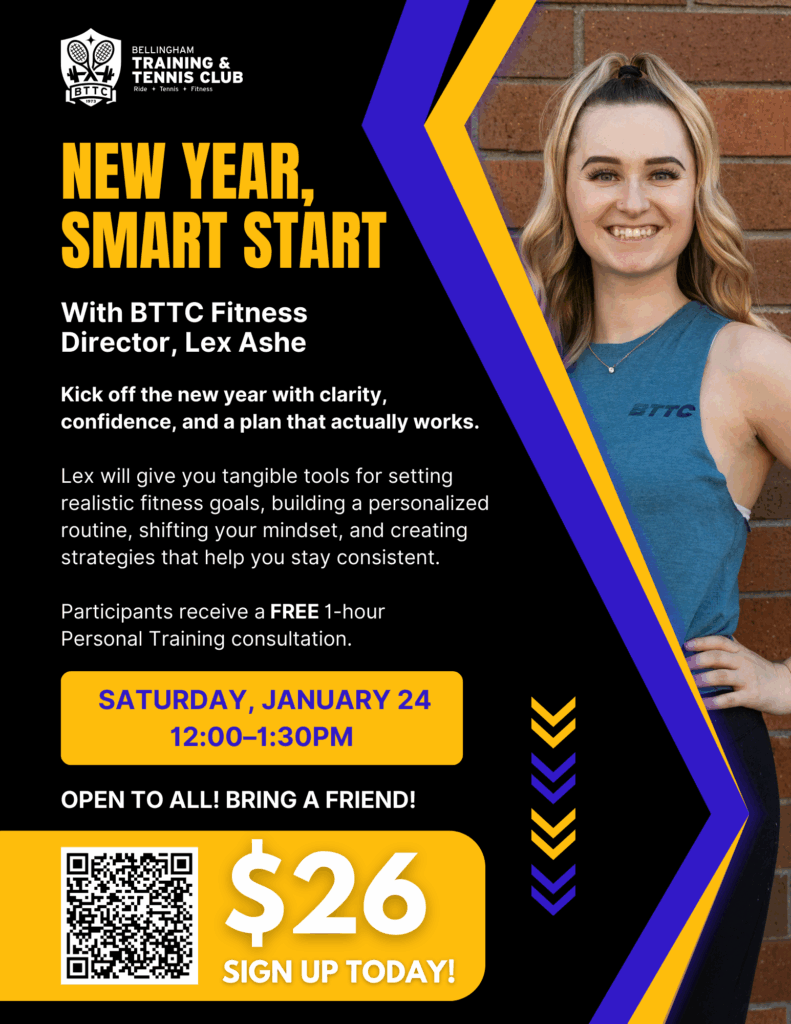
Join Lex for our “New Year, Smart Start” workshop in January for more tools for developing attainable goals.